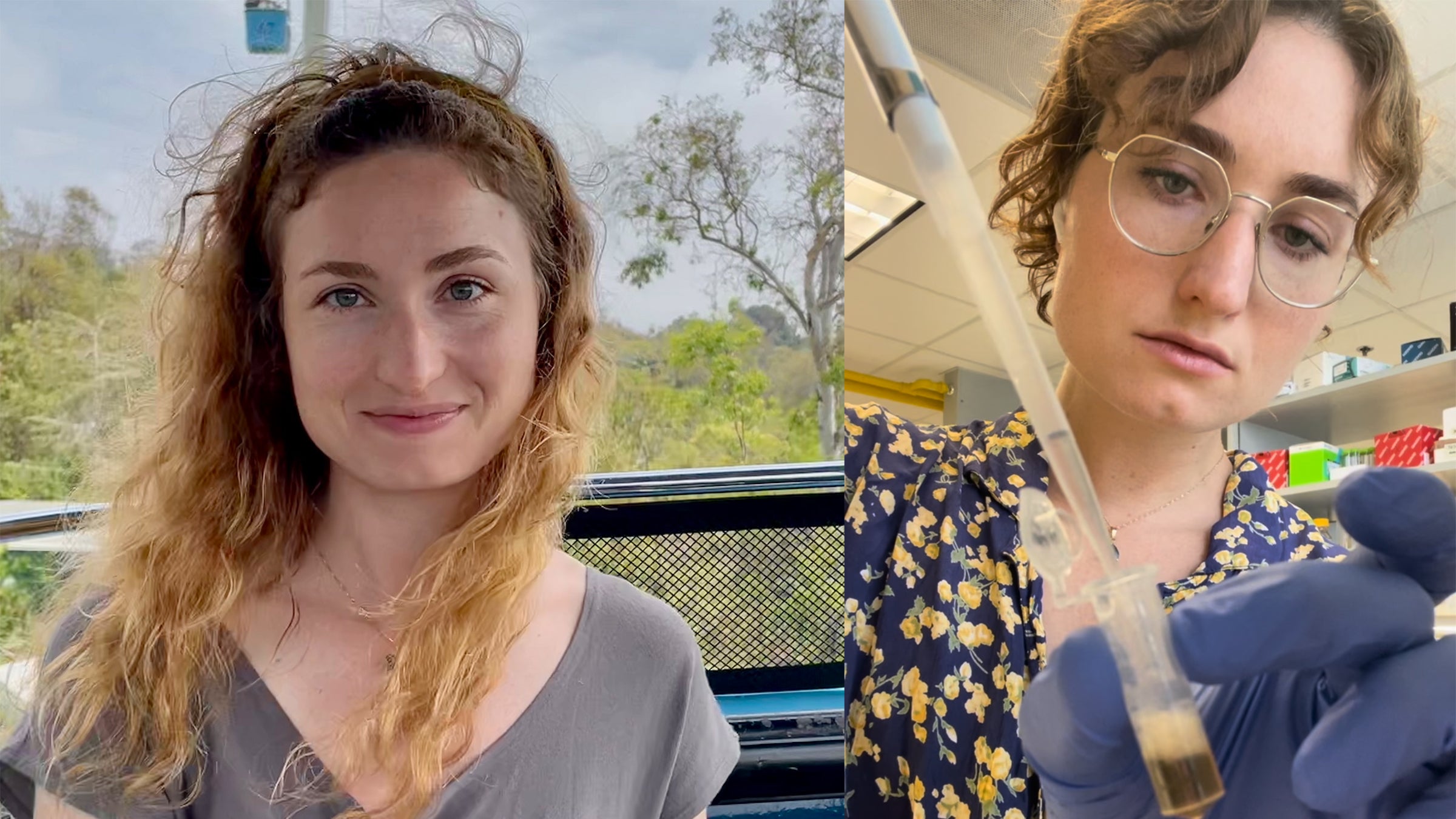
Right: Daryl Barth in lab examining nylon left over in the superworm excrement.
Daryl Barth is one is one of our 2025 Stengl-Wyer Fellows. She studies the gut microbiomes of plastic-eating superworms to uncover novel enzymes capable of breaking down persistent plastics like polystyrene, polyethylene, and nylon.
In this Q&A, Daryl talks about her fascinating research on how her study of an insect's microbiome can help advance understanding of tackling plastic waste.
Tell us where you came from before UT, and what you studied then?
Before coming to UT, I followed a pretty interdisciplinary path across materials science and biology. I studied Materials Science and Engineering at University of California, Berkeley, where I worked on superconducting materials. I then spent time at École Nationale Supérieure des Mines de Nancy studying magnetic materials, followed by research at Universidade de Aveiro on tissue engineering scaffolds.
I eventually transitioned more fully into biology at UT Southwestern Medical Center, where I worked on single-cell reprogramming using transcription factor cocktails. That progression, from materials to living systems, ultimately led me to my current work at UT, where I combine both perspectives.
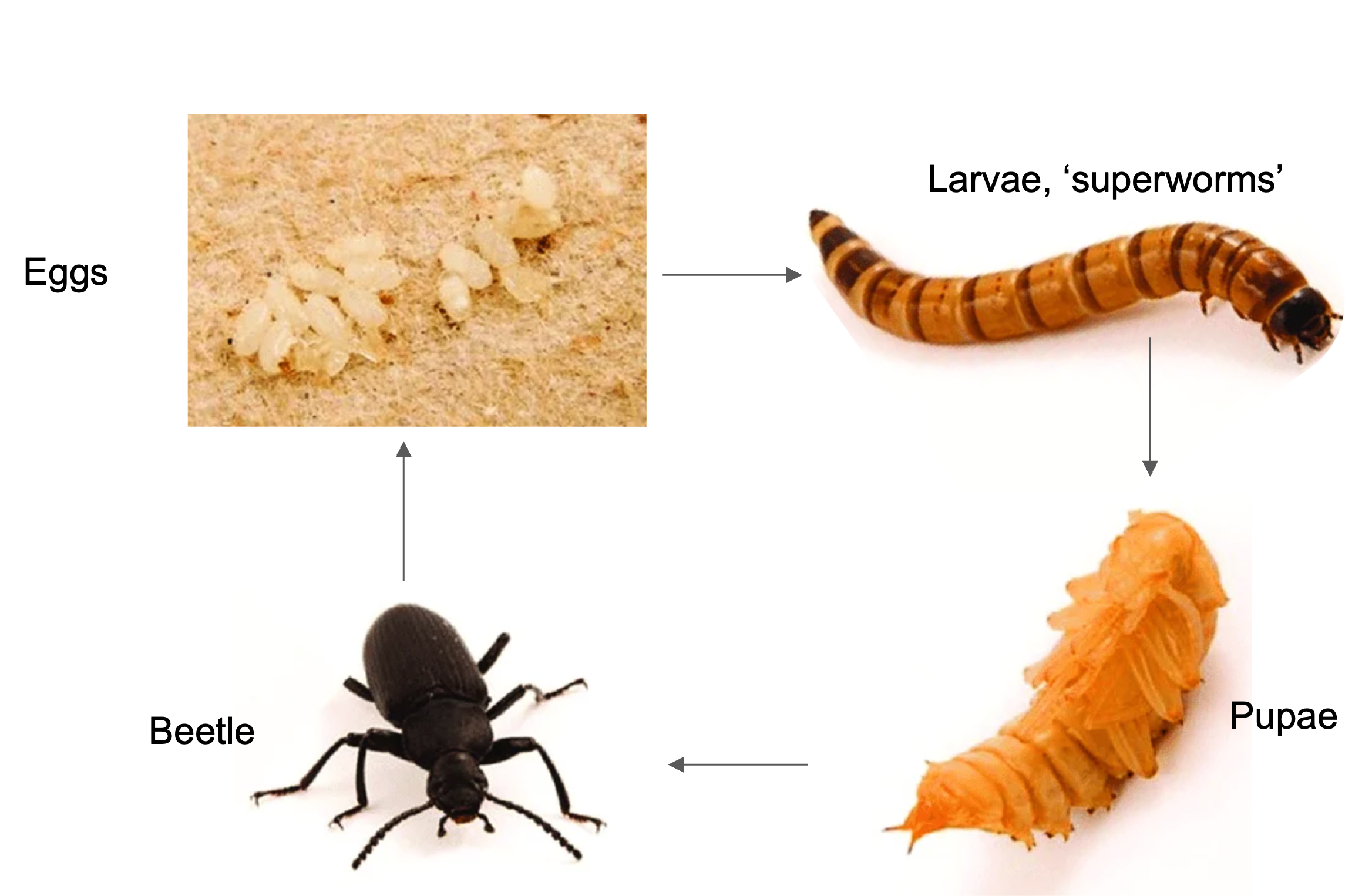
Schematic of the darkling beetle lifecycle. Adapted from Rumbos, C., Athanassiou, C., Journal of Insect Science, 2021.
You study the gut microbiomes of plastic-eating superworms. Can you elaborate on this, especially what a superworm is? How did you become interested in this?
A “superworm” is the larval stage of the darkling beetle, Zophobas morio. They’re commonly used as feed for reptiles and birds, but they’ve gained scientific attention because they can survive on, and even consume, plastics like polystyrene. I'm not sure of how people actually started studying them, but the story I like best is that researchers first noticed superworms chewing through their Styrofoam containers, which sparked curiosity about whether microbes in their gut might actually be breaking the plastic down. That idea really drew me in: it’s a natural system solving a very modern problem. In my work, we feed superworms different types of plastics and analyze their gut microbiomes to identify enzymes involved in degradation. Recently we applied a pretreatment that made nylon the fluffy so the worms could physically ingest it, which led to the discovery of a previously uncharacterized enzyme capable of degrading nylon. That kind of finding expands what we think biology is capable of and opens the door to new approaches for tackling plastic waste.
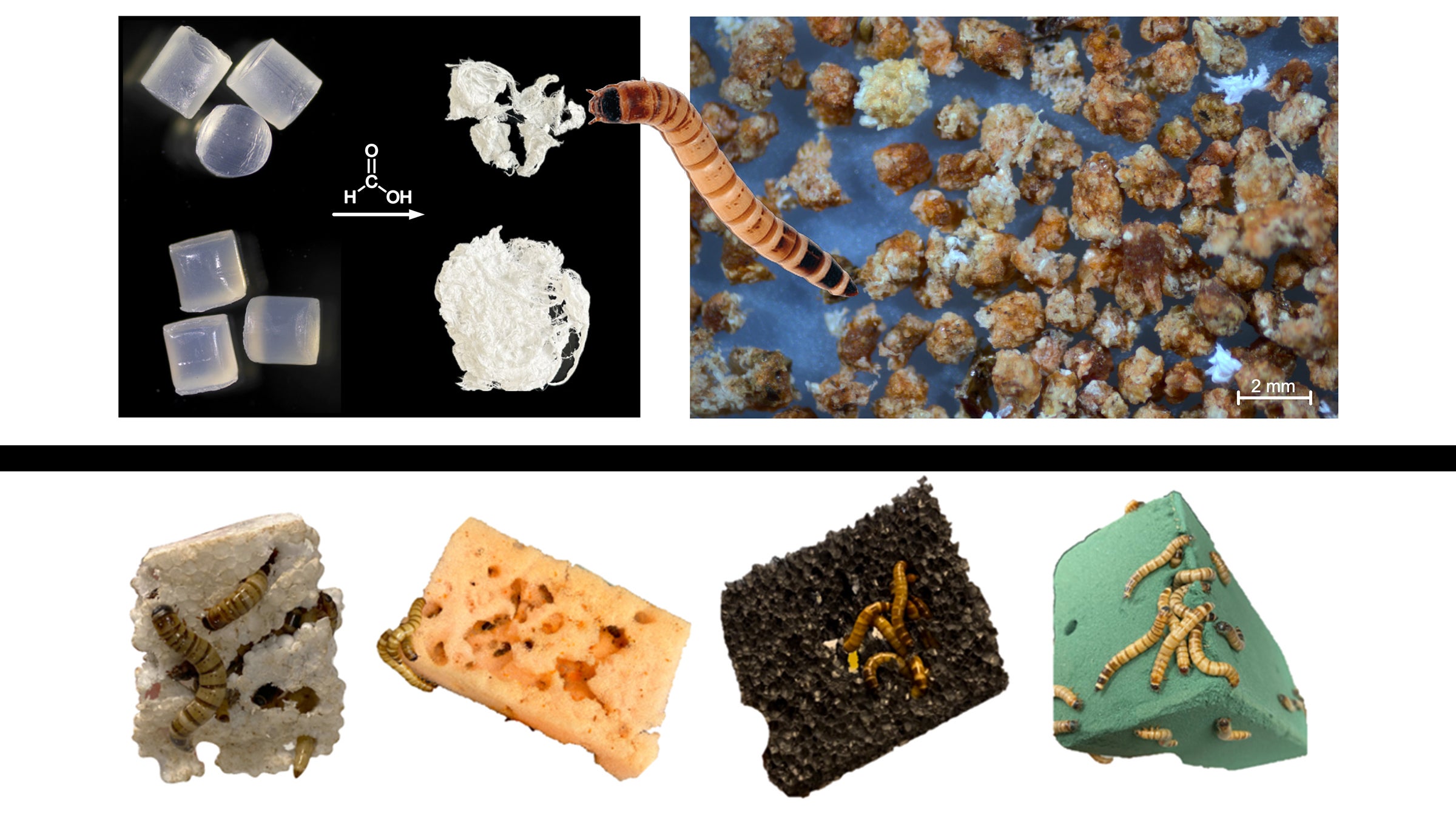
Top: After nylon is fluffed, superworms consume the nylon, exposing it to their microbiome, and poop out undigested bits in their excrement called frass. Bottom: Superworms caught in the act of chewing on different types of plastic.
Does Texas present a unique situation, challenge, or benefit for your research?
One of the biggest advantages of being at UT is the truly interdisciplinary environment. This project sits at the intersection of microbiology, biochemistry, computational biology, and ecology, and UT makes it easy to collaborate across those areas.
Programs like the Freshman Research Initiative, and especially the bioprospecting stream led by Dr. Kasia Dinkeloo, have been foundational to this work. They’ve not only supported the research itself, but also created a collaborative environment where undergraduate researchers contribute meaningfully to discovery. That combination of expertise and community has been a major driver of the project’s success.
How will being a Stengl-Wyer Fellow help advance your work?
As a Molecular Biosciences student, the Stengl-Wyer Fellowship has helped me connect more deeply with the Integrative Biology community and think about my work through an evolutionary lens. That broader perspective has been incredibly valuable when studying microbiomes and enzyme diversity. The fellowship has also provided meaningful professional development opportunities. Being part of a cohort of researchers working on biodiversity-related challenges has been both inspiring and grounding. Practically, it’s also enabling me to share this work more widely, my research was recently accepted to the International Society for Microbial Ecology conference, and the fellowship will support my travel to present and learn from others in the field.
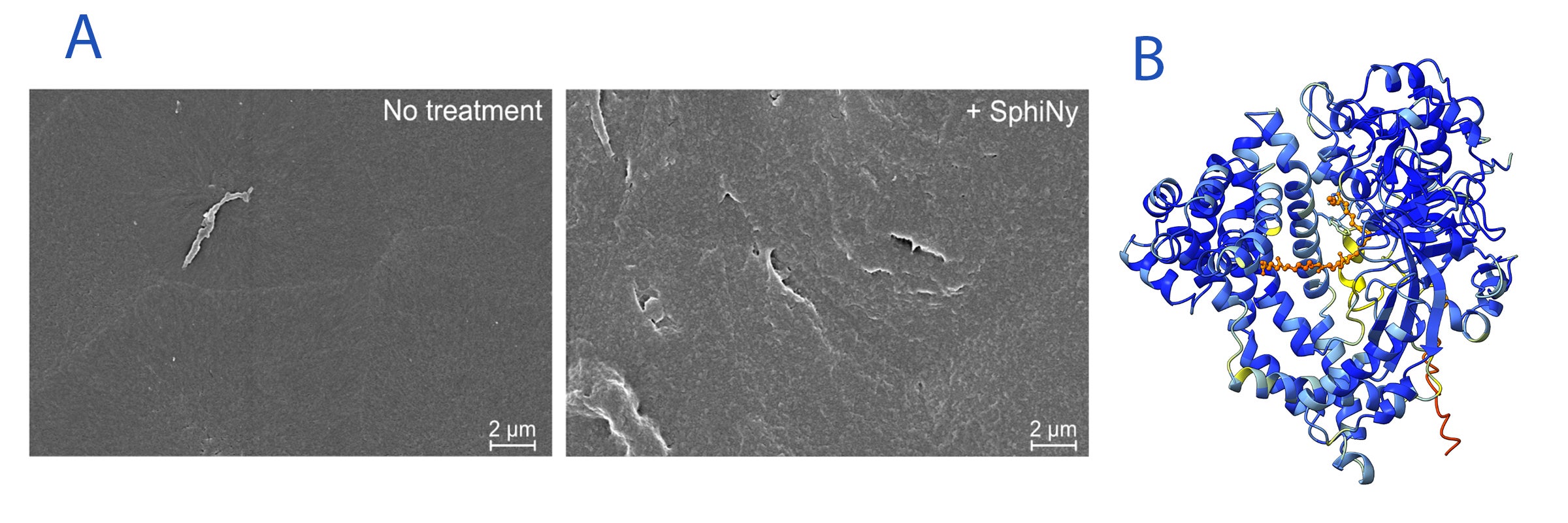
A: scanning electron images of a nylon plastic surface. On left is a normal piece of nylon. On right is nylon that was exposed to the enzyme Daryl and colleagues found. The enzyme has started degrading the surface of the plastic. (Photo: Isa Madrigal Harrison and the UT Austin Imaging core, from a manuscript in progress.) B: Protein structure prediction of SphiNy, the new nylonase discovered from feeding the superworms nylon. (From a manuscript in progress.)
Where do you see your research agenda heading after UT?
I’m very interested in translating scientific discoveries into real-world impact, particularly in the sustainability space. After graduating, I’ll be joining Flagship Pioneering in Boston, where I hope to continue exploring how biological systems can be leveraged to address challenges like plastic pollution. More broadly, I’m excited about bridging discovery and application, taking insights from natural systems, like plastic-degrading microbiomes, and developing them into scalable technologies that can make a meaningful environmental impact. I’m also excited to explore science communication more broadly, this spring, we’re launching a podcast supported by the UT Greenfund called Trash(ed) that will focus on plastic, waste, and sustainability within the UT community.
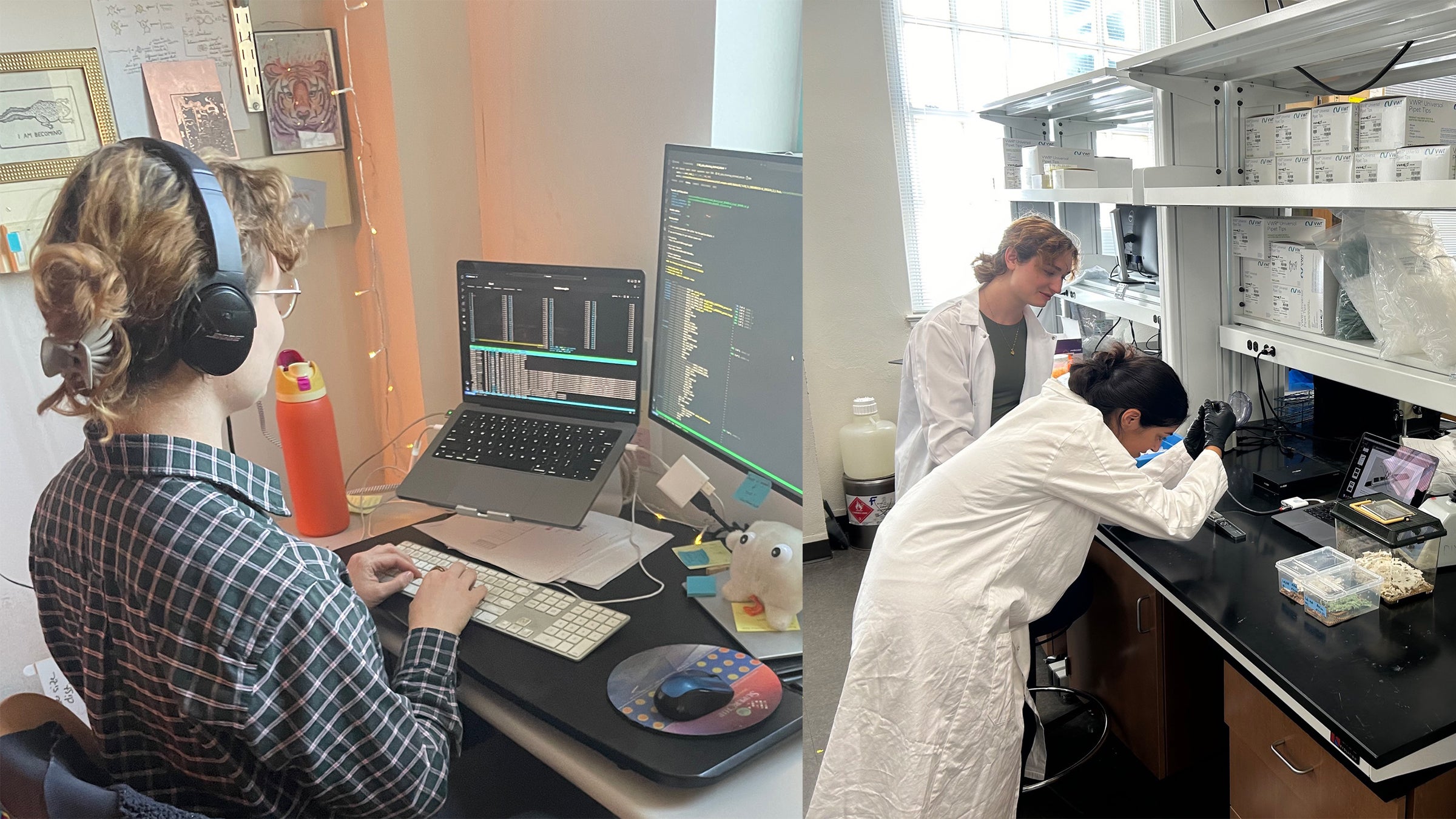
Left: Daryl at her computer starting a pipeline to analyze sequencing data. Right: Daryl working with FRI students.