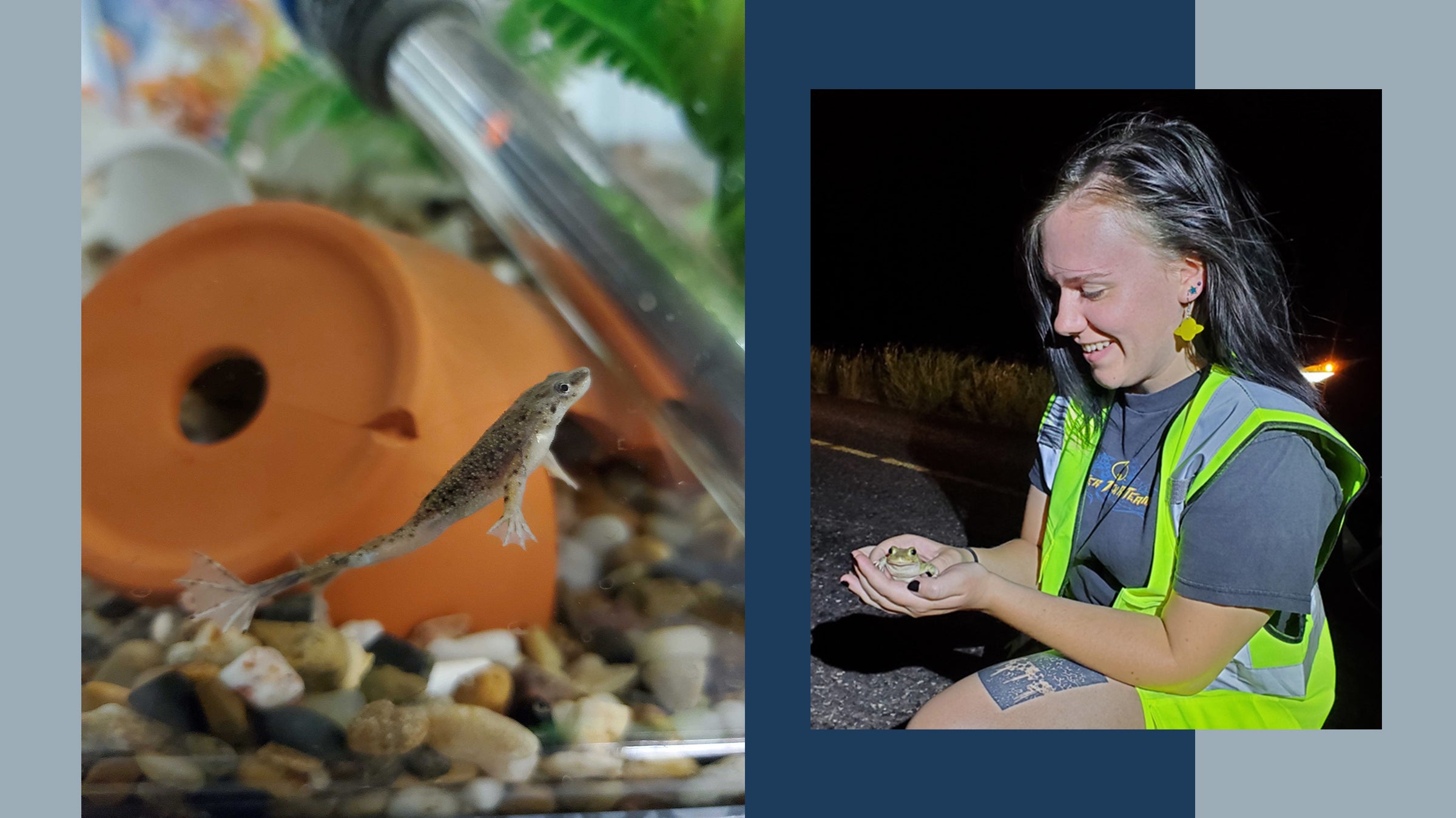
Left: An African Dwarf frog (Hymenochirus boettgeri), one of the individuals Rebecca used for her Master's research. Right: Rebecca holding a spadefoot toad caught in West Texas
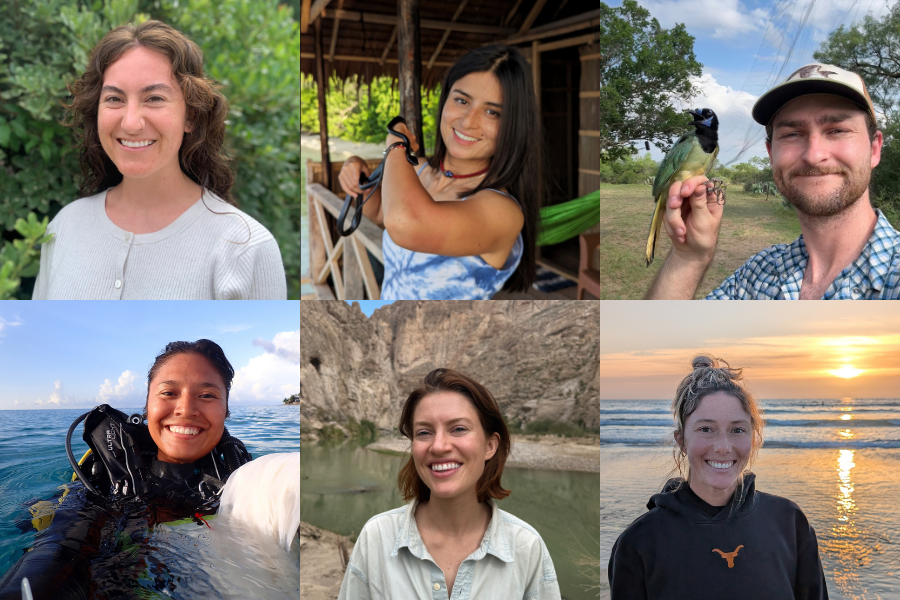
Rebecca Clemons is one is one of our 2025 Stengl-Wyer Fellows. Her research focuses on how amphibian immune systems respond to a deadly fungal pathogen. She is interested in understanding why some individuals are extremely susceptible to infection while others are highly resistant. She is a PhD candidate in the lab of Dr. Kelly Zamudio.
In this Q&A, Rebecca talks about her research on the alarming issue of a pathogen threatening amphibian populations worldwide.
Tell us where you came from before UT, and what you studied then?
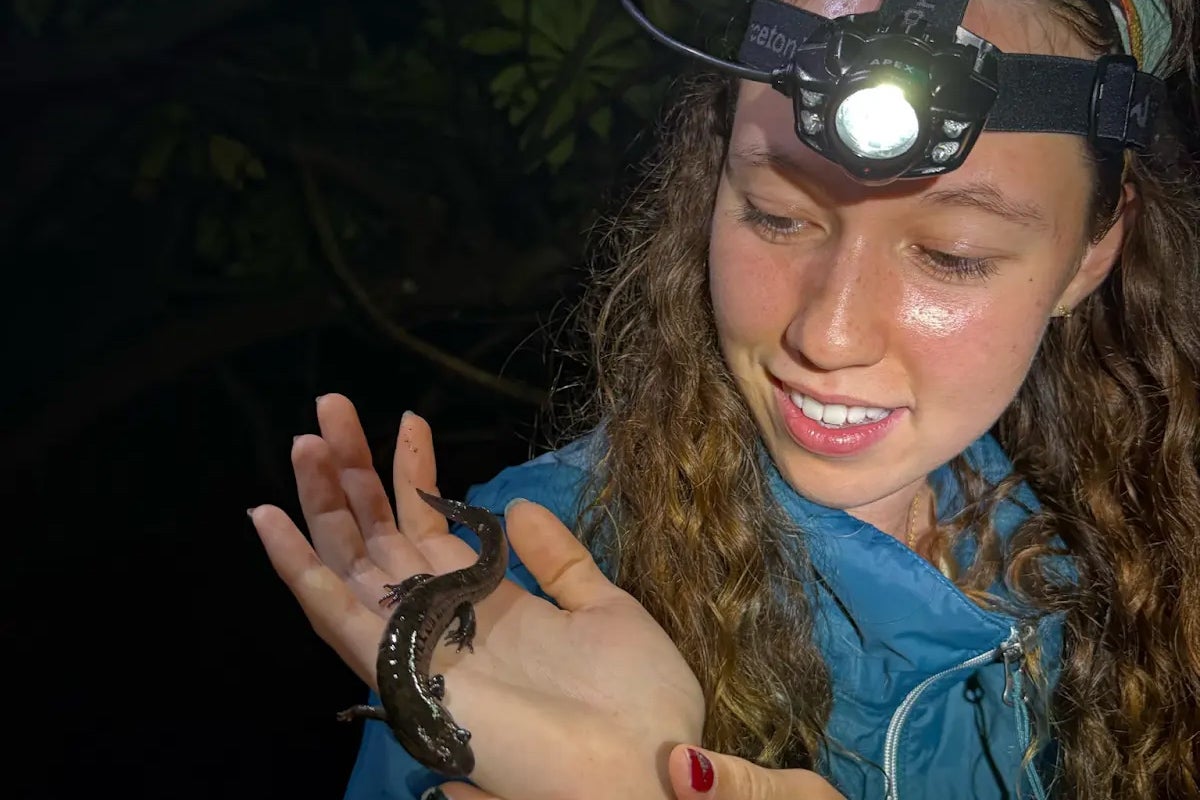
Before coming to UT, I was at the University of Michigan where I did my Bachelor’s and my Master’s in Ecology and Evolutionary Biology. I worked in the lab of Dr. Tim James, where we studied the diversity of early-diverging fungi (think microscopic fungi, not mushrooms!). I got to work with lots of cool people on lots of cool projects, including the establishment of a new cryo-preserved live culture collection, descriptions of multiple new species of microscopic aquatic fungi, and surveying fungal cultures for new species of viruses. For my Master’s thesis, I helped describe a virus that infects some strains of the amphibian fungal pathogen called Batrachochytrium dendrobatidis, or Bd for short, and determined how this virus impacts Bd growth and virulence.
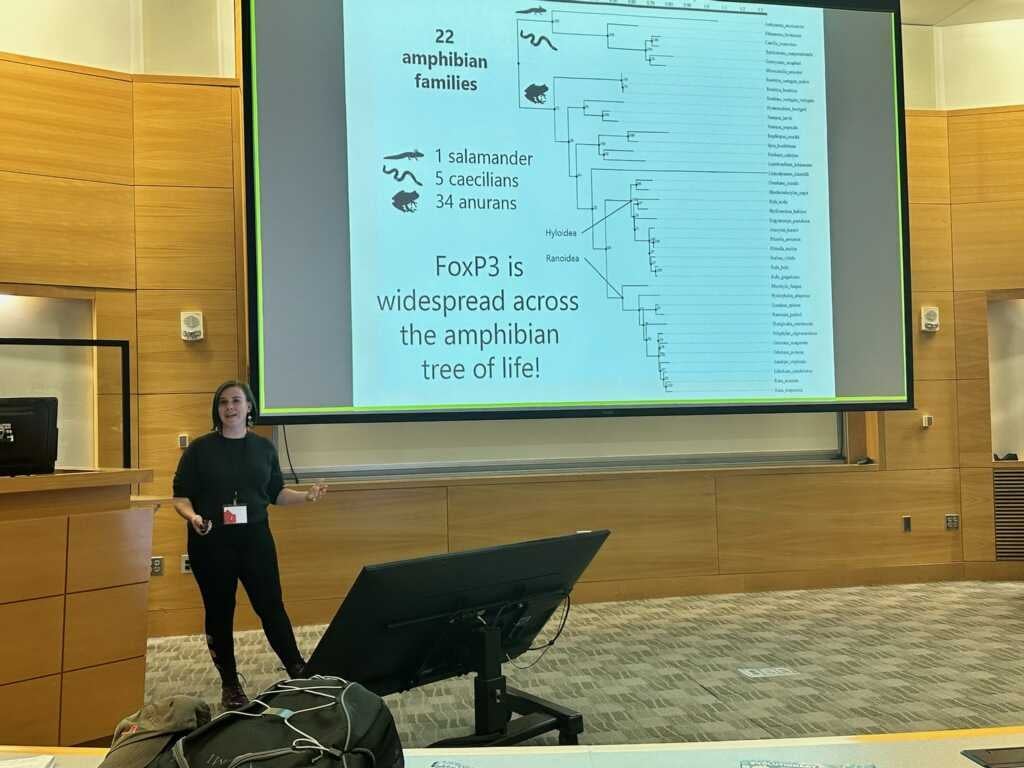
Rebecca presenting some of her PhD work at the annual Amphibian Disease Meeting.
You study how amphibian immune systems respond to deadly fungal pathogens. Can you elaborate on this a bit? And how did you become interested in this?
Amphibians all over the world are being threatened by Bd. I’m interested in studying this pathogen because it is a threat to global amphibian biodiversity, but also because I think the immune system is incredible in its complexity and function! All sorts of animals, humans included, need to deal with pathogens every day, and I’m interested in how the immune system can determine why some individuals are more susceptible to disease than others. I got started working on Bd as an undergraduate assistant to Dr. Anat Belasen in the James lab. I helped her determine which frogs in Brazil’s Atlantic Forest were infected with Bd, and how Bd prevalence was related to habitat fragmentation. I continued working on Bd for my Master’s thesis, where I studied how viral infection can influence Bd virulence. Now for my PhD I’m approaching this same system from a different angle and trying to understand how susceptibility to Bd varies between different amphibian hosts based on immune function.
Does Texas present a unique situation, challenge or benefit for your research?
UT has a lot of great resources to support my research. Not only are there a bunch of other researchers here also studying amphibians, but I also have access to lots of cutting-edge equipment and facilities. I’ve already been able to use the Genome Sequencing and Analysis Facility (GSAF), UT’s sequencing core, to generate data on differences in immune genes between populations of endangered toads. Many of my projects have also been made possible by access to UT computing resources like Texas Advanced Computing Center (TACC) and the Biomedical Research Computing Facility (BRCF) pod servers to analyze my sequence data. Amphibians have really huge genomes! I will soon be using equipment at UT’s Flow Cytometry and Microscopy Core to isolate and analyze amphibian immune cells. The ability to easily access these resources has helped shape my research objectives. The greatest challenge that Texas has presented me, as a native Michigander, is the extreme heat. I think it should not be over 85 degrees, ever.
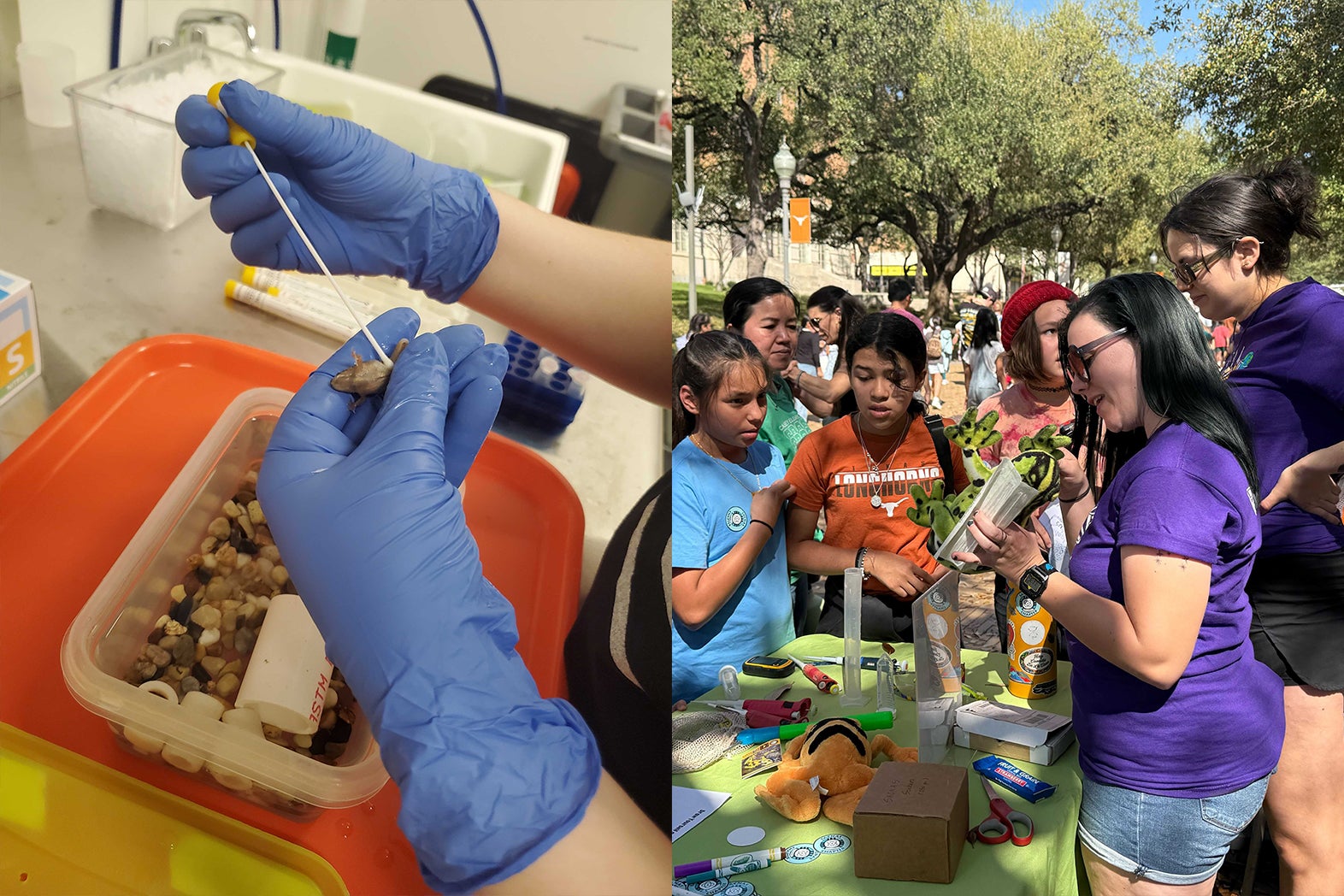
Left: swabbing a Hymenochirus to test for Bd. Right: Rebecca at UT STEM Girl Day 2026 showing how they swab frogs to test for pathogens like Bd.
How will being a Stengl-Wyer Fellow help advance your work?
Being a Stengl-Wyer Fellow has given me the opportunity to broaden my research and accept responsibilities that benefit my community. I’ve had the time and resources to take on projects that I’m excited about in addition to my planned dissertation research, like getting involved with an ongoing project at UT’s Turtle Pond. I also get to participate in outreach events to connect with science enthusiasts of all ages. Being exposed to science when I was young through local events put me on a path to becoming a scientist, and I’m excited to be able to provide that exposure for other future scientists. Here at UT, the Stengl-Wyer program has created a welcoming and supportive community of amazing grad students and post-doctoral researchers that I am grateful to be a part of.
Where do you see your research agenda heading after UT?
In general, I am interested in studying immunity in non-model organisms. We know so much about the mammalian immune system due to the implications for human health, but we know relatively little about other species. However, the overall structure of the immune system is very similar across vertebrate species, so I believe that our understanding of the human immune system can pave the way for gaining a deeper understanding of immunity in other species. My research will continue translating tools and techniques used for studying immunity in humans and mouse models to study immunity in non-model organisms, especially amphibians and reptiles. Regardless of where my research takes me, I am devoted to providing inclusive mentorship and to ensure my science is thorough and accessible.