The World’s “Dumbest” Fish Has Evolved Mighty Mitochondria
New research by integrative biology professor Justin Havird reveals the mola mola's remarkable evolutionary adaptations and life history.
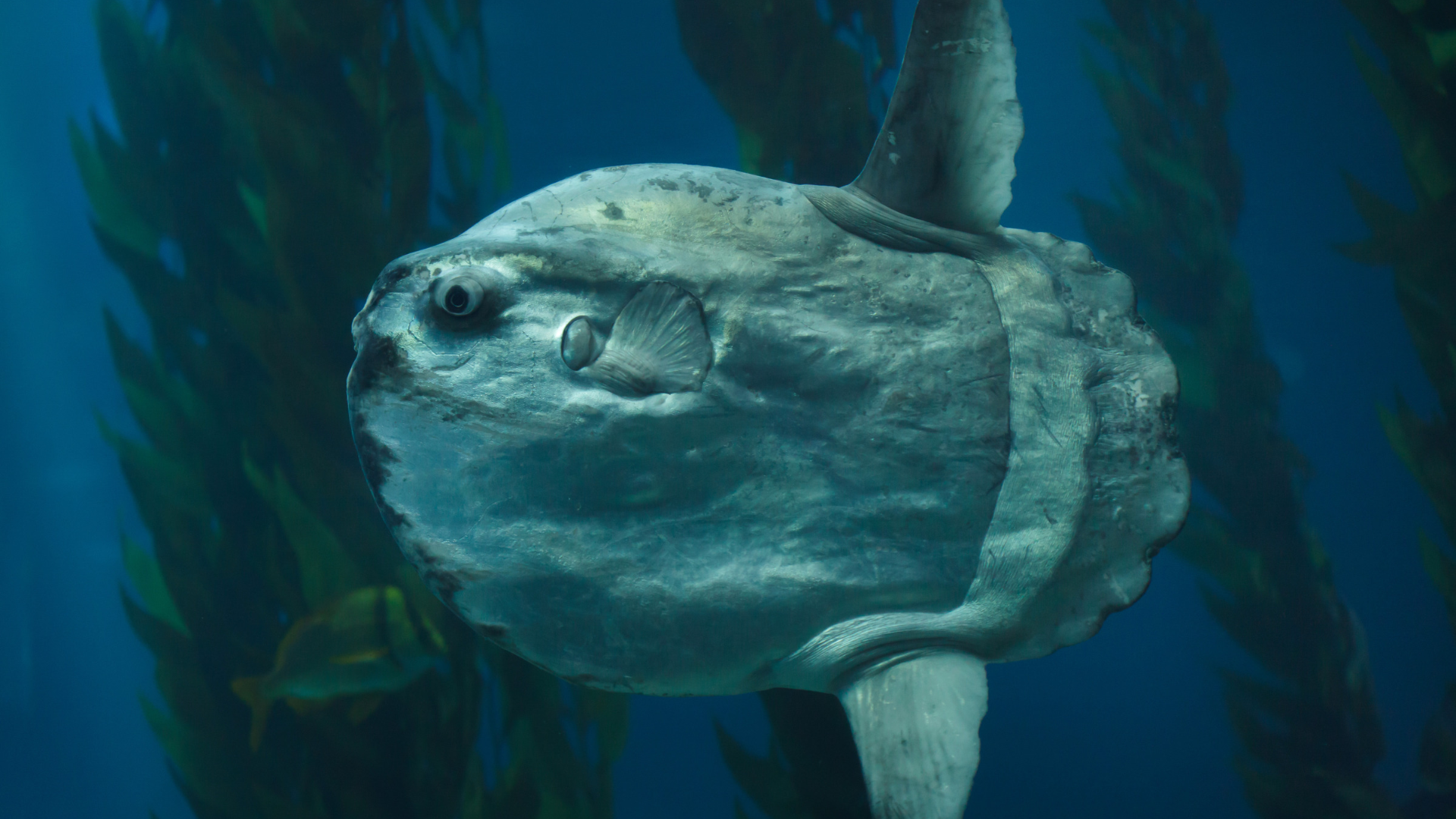
Photo Credit: wrangel via Getty Images
If you search up “the world’s dumbest fish” on the internet, you may meet a strange creature with wide eyes and an open-mouthed expression, drifting aimlessly in the ocean blue. This is the mola mola, or ocean sunfish. It is the world’s largest bony fish, and it has acquired the aforementioned nickname due to its comical appearance and slow-moving lifestyle.
In recent years, photos and videos of the mola mola in various predicaments have spread across the web: getting eaten alive by sea lions, bullied by orcas, and picked at by seagulls. At first glance, it appears that the mola mola have no obvious mechanisms to protect themselves from predators. Their awkward vertical fins and tailless body plan also do no favors for evading their attackers. More or less, the mola mola seems to be an evolutionary mistake that has people wondering, “how has this fish not become extinct yet?”
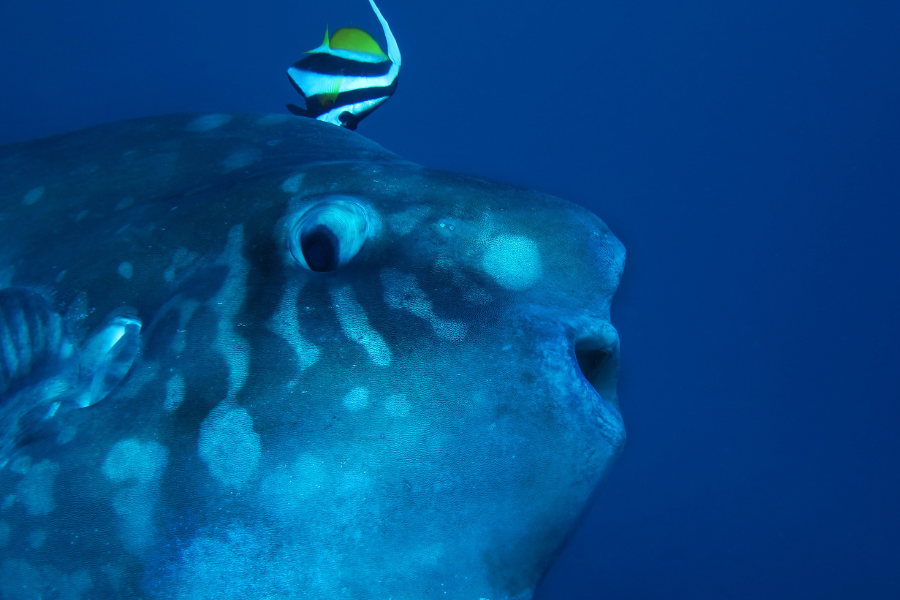
With its silly appearance, the mola mola has become one of the world’s most recognizable fish. Photo credit: ilkersener via Getty Images.
However, underneath all of this negative press, the mola mola possess some of the most remarkable evolutionary adaptations and life history in the animal kingdom.
Justin Havird, an associate professor in the Department of Integrative Biology at The University of Texas at Austin, was inspired to do some research of his own after watching an informative mola mola video by Hank Green. As an evolutionary biologist, Havird was curious to learn more about the ocean sunfish’s evolutionary histories through their mitochondria. In his recently published paper, Havird analyzes the ocean sunfish’s mitochondria to see what their mitochondrial genomes reveal about their life history and adaptive evolution.
Often described as the powerhouse of the cell, mitochondria are the central hubs for metabolism and energy production in animals and can reflect locomotive and energetic capacity. Mitochondria also have their own set of DNA which allows researchers to analyze mitochondria evolution independently from the nuclear genome, offering a unique perspective on how a species evolved over time.
“I’m always viewing things from a mitochondria evolution lens,” Havird said. “I asked myself: well, do these derpy fish have derpy mitochondria?”
Havird’s original hypothesis is that animals with higher locomotive capacity and higher energy lifestyles would have evolved more optimal mitochondria. Therefore faster-moving, high energy animals would show evidence of more intensified selection in their mitochondrial genomes. Based on this hypothesis, the slow-moving, sluggish mola mola is predicted to show less effective mitochondrial DNA evolution.
Using publicly available mitochondria DNA data, Havird analyzed the rate of mitochondria evolution in the ocean sunfish family, Molidae. Contrary to expectations, the ocean sunfish actually showed intensified selection in their mitochondrial genomes, suggesting that they may indeed lead high-energy lifestyles.
Why do these slow-moving fish have such optimized energy production?
“Organisms may also lead an ‘energetic’ lifestyle without having fast movement.” Havird wrote in his paper.
Though sunfish are relatively slow swimmers, they perform frequent vertical migrations to feast on jellyfish in deep waters. Molas can dive over 500 meters deep, into the Twilight Zone of the ocean where temperatures can go as low as 5 °C (41 °F), before coming back to the surface to warm themselves up by basking in the sun. Being able to tolerate such extreme temperature ranges may require high energy since ectotherms, or cold-blooded animals, like the mola mola thermoregulate by altering cellular metabolism through mitochondrial function.
In addition to their unique lifestyle, mola molas have the highest reproductive output of all vertebrates, with a single female capable of producing upwards of 300 million eggs in one spawning cycle. Producing such an enormous number of eggs demands significant energy resources that could explain selection pressure on sunfish mitochondria as well.
“We can find lots of evidence that they are highly specialized, and their mitochondrial genomes may reflect that,” Havird said.
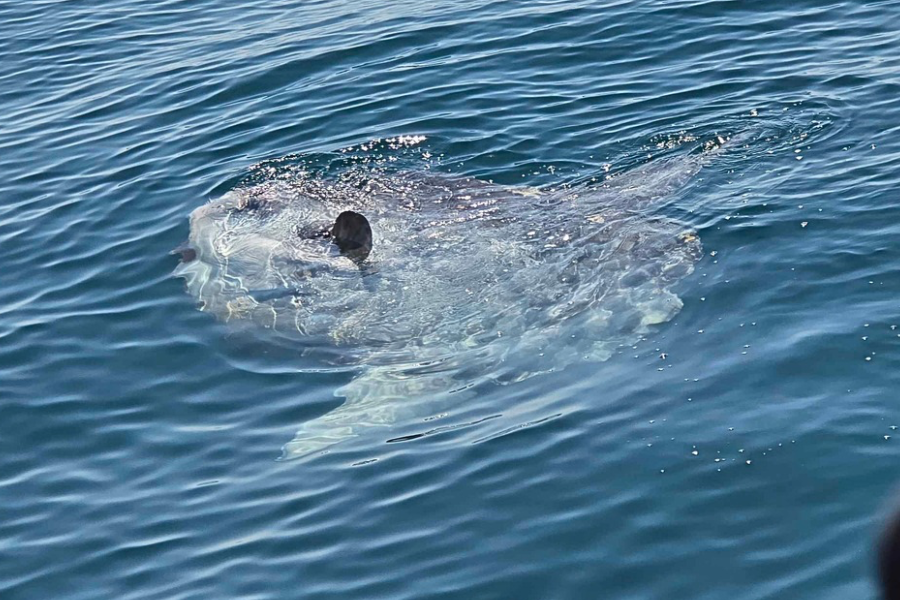
A mola mola basking in the sun at the water’s surface. Photo credit: Aravind Shandilya.
According to Havird, there has been a reclassification of the mola mola and other ocean sunfish as active swimmers and specialized predators, far from what the public might deem the world’s dumbest fish. While natural selection is not perfect, the oddities of nature are supported by evolutionary reasons.
“Appearances can be deceiving,” Havird states. “Just because we think a species is weird or a mistake doesn’t mean that it is.”